Bitters Explained: Are They Alcohol, and Do They Matter?
Traditional bitters are bottled at spirit strength yet used by the dash. The honest math on what lands in your glass, the true zero proof bottles, and how to use bitters well.
Published October 28, 2026
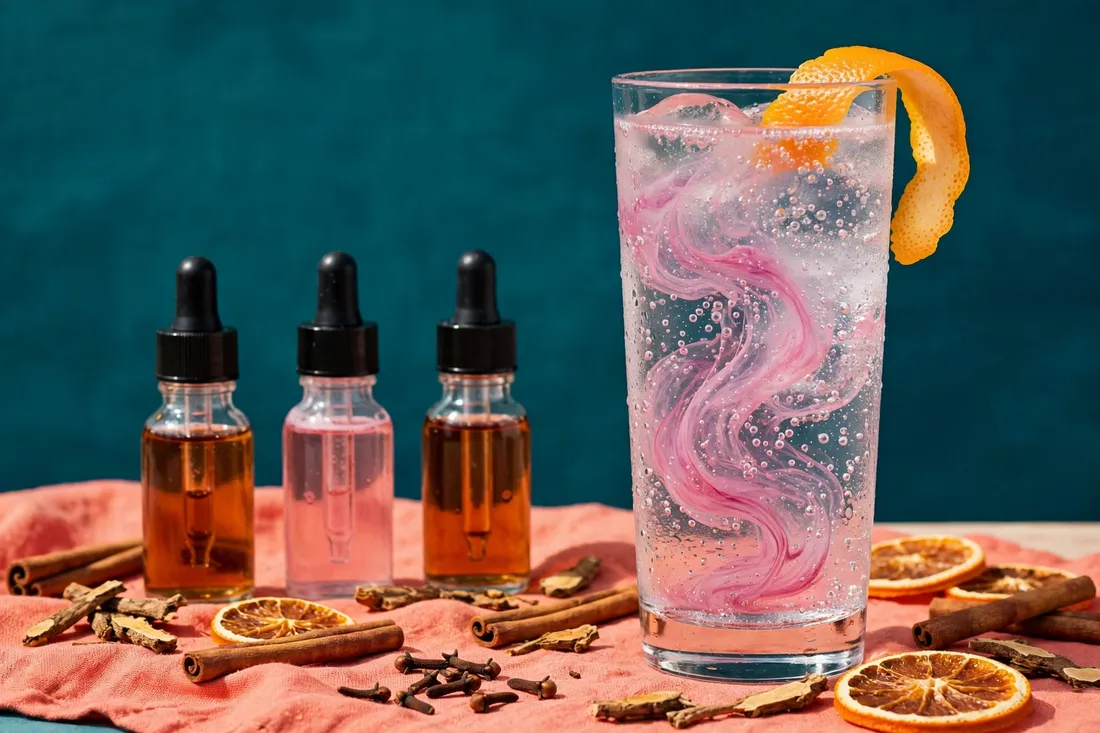
Every zero proof bar has one small bottle that starts arguments. It looks like medicine, it pours by the dash, its label is famously too big for the bottle, and sooner or later someone holding a glass asks the fair question: wait, is there alcohol in this? The short answer is yes for the classics, a trace in the glass, and no for a newer shelf of bottles built for exactly this moment. Here is the whole picture, with the math shown, so you can choose on facts instead of folklore.
Are bitters alcohol?
Yes. Traditional bitters are bottled at spirit strength, most of them between 35 and 45 percent alcohol by volume. Angostura aromatic bitters, the bottle behind almost every bar on earth, sit at 44.7 percent. Peychaud’s, the anise led bitters of the sazerac, sit at 35 percent. Angostura orange bitters run lower at 28 percent, and the same house bottles its cocoa bitters at 48 percent, stronger than most whiskey.
The alcohol is not there for drinking. It is a working ingredient. Bitters are concentrated extracts of bitter roots, barks, seeds, peels and spices, and alcohol pulls flavour and aroma out of those plants far better than water can, then keeps the extract stable on the shelf for years. Gentian root does the heavy bittering in most aromatic blends, backed by warm spices like cinnamon, clove and cardamom, plus citrus peel for lift. Alcohol is the solvent that marries them into one potent liquid that can season a whole drink with a few drops.
That is also why bitters sit in grocery stores that sell no wine or spirits at all. In the United States, the classic brands are classed as flavouring, a non potable product in the same family as vanilla extract, which is itself bottled at about 35 percent alcohol. Nobody drinks either one by the glass, and the law treats them as ingredients, not beverages.
The dash math
Bitters are dosed in dashes, and a dash is small. Bartenders measure it at about an eighth of a teaspoon, roughly 0.6 millilitres. Run the numbers on a strong aromatic bitters at 44.7 percent and the picture gets clear fast.
- Two dashes in a short stirred drink of about 120 millilitres with dilution: about half a millilitre of pure alcohol in the glass, landing near 0.4 percent alcohol by volume.
- Two dashes in a tall soda serve of about 240 millilitres: the same half millilitre spread twice as far, landing near 0.2 percent.
- Four dashes in a tall serve: roughly double, closing on 0.4 percent.
- Eight dashes in a lemonade serve, the classic lemon, lime and bitters pour loved in Australia: around 0.9 percent, past the line entirely.
That last case is the one worth remembering. The under 0.5 percent mark is where United States rules stop calling a drink non alcoholic, and it is easy to cross it in drinks where bitters are a headline flavour rather than a seasoning. One or two dashes in a full glass is a trace by any honest measure, in the same territory as ripe fruit and fresh bread. But a trace is not zero, and for some drinkers zero is the whole point: people in recovery, people who are pregnant, people whose faith or medication rules alcohol out, and any guest who asked for an alcohol free drink and deserves exactly that. The respectful move is simple. Know which bottle you are holding, and say what is in the glass.
Do bitters even matter in a zero proof drink?
They matter more here than anywhere else in the bar. A spirit brings its own depth, burn and length to a classic cocktail, so bitters there are a finishing touch. Take the spirit away and the drink loses that whole layer, which is exactly the layer bitters rebuild.
Bitterness does three jobs at once. It pulls perceived sweetness back, so a drink built on syrups and juices tastes balanced instead of candied. The aromatics in the blend, the spices and peels and roots, give the nose something complex to work on, the way a good spirit does. And the bitter finish lengthens the sip, so the flavour stays with you instead of vanishing like soda. Bitters are the salt of the bar: a pinch changes nothing you can point at and everything you can taste. The Zero Proof Old Fashioned on this site is four ingredients in a glass, and the two dashes are the difference between sweet tea with ice and a stirred, serious classic. A Zero Proof Whiskey Sour leans on them the same way.
The three families on the shelf
Traditional spirit based bitters. Angostura, Peychaud’s, Regan’s orange bitters at 45 percent, and the long craft bench behind them, with most brands publishing figures between about 28 and 51 percent. This family has the deepest extraction and the longest track record, and it always carries the trace alcohol in the math above. If your household is fine with a trace, these remain brilliant tools.
Glycerin based, and not always zero. Fee Brothers built its name on glycerin based bitters, a method the family leaned on to stay in business through Prohibition, and glycerin gives the liquid a soft, slightly thick pour. The trap is assuming glycerin base means alcohol free. Published figures for the line run from about 1.3 percent for the celery bitters up through 4.8 percent for the cherry, because flavouring extracts in the blends can bring alcohol with them. Some flavours in the wider market run far higher still. This family can be an excellent middle path, but only the label on the flavour in your hand tells you where it lands.
True zero bitters. A newer shelf built for this exact question. All The Bitter, made by two former sommeliers in California, states plainly that its bottles never see a drop of alcohol: the extraction runs on non GMO vegetable glycerin with a splash of apple cider vinegar for balance, whole organic botanicals, no added sugar, no colours, and a published price of about $26 for a four ounce bottle across its aromatic, orange and New Orleans styles. El Guapo of New Orleans states that every product it makes is 100 percent alcohol free, glycerin based, no sugar added, in flavours that run from chicory pecan to tiki leaning blends. DRAM in Colorado works the glycerin method too, in flavours like black bitters and palo santo. Expect this family to pour a touch softer and sweeter than spirit based bitters, because glycerin rounds the edges. Dose by taste, use a full dropper where a recipe expects a hard dash, and the results are genuinely classic.
One honest note belongs in this section. Bitters of every family are real plant extracts, and plants are chemistry. The makers of alcohol free bitters themselves advise checking with a doctor before using herbal bitters during pregnancy or alongside medication, and this site says the same. Our guide to Zero Proof Drinks When Pregnant walks through the label reading habit in full.
How to use bitters like you mean it
Start with the simplest serve in the whole repertoire, the one that teaches your palate what bitters do.
- Fill a tall glass with ice and pour in **180 millilitres of cold soda water**, about three quarters of a cup.
- Add **two dashes of aromatic bitters**, or a full dropper of a true zero bitters, and watch the pink ribbons curl through the glass.
- Add **a teaspoon of fresh lime juice** and stir once, gently, so the fizz survives.
- Taste. Add one more dash at a time until the soda tastes like a drink with a point of view, then stop. For most palates that lands at three or four dashes.
- Express **a strip of orange or lemon peel** over the glass, rub the rim, and drop the peel in. Serve it like you mean it, because now it is a drink, not a garnish delivery system.
From there, the rules travel well. Add bitters before you judge sweetness, because they will pull the drink drier than the recipe reads. Match the family to the drink: aromatic for stirred and dark, orange for citrus forward serves, fruit and floral styles for spritzes and sodas. And when you are serving other people, build with the true zero bottle by default and keep the traditional bottle for drinkers who have told you a trace is fine. Nobody should learn what was in their glass after the fact.
No bottle of your own yet? The acid and depth a dash provides can be borrowed in the meantime from a Shrub, a strong chilled tea, or citrus oil and a pinch of salt, and the drinks will still stand up.
The bottom line
Yes, classic bitters are alcohol, bottled strong and dosed tiny, and for most drinkers the trace in the glass is a footnote. They still matter enormously, because in a zero proof drink they carry the depth the spirit left behind. So stock the shelf in two rows: one true zero aromatic bottle as the house standard, an orange beside it for range, and the traditional classics behind them for households where a trace is welcome. Read the label on every flavour, do the dash math when it counts, and the smallest bottle on your bar becomes the most honest one too.
Questions, Answered
Are bitters alcoholic?
Traditional bitters are. Angostura aromatic bitters are bottled at 44.7 percent alcohol by volume, and most classic brands sit between 35 and 45 percent. They are sold as flavouring rather than as a beverage, the same shelf logic as vanilla extract, and a small group of makers now publish true zero proof bitters built on glycerin instead.
How much alcohol do two dashes actually add?
A dash is about an eighth of a teaspoon, roughly 0.6 millilitres. Two dashes of a 44.7 percent bitters carry about half a millilitre of pure alcohol, which lands a short stirred drink at around 0.4 percent alcohol by volume and a tall soda serve at around 0.2 percent. That is a trace, and it is not zero.
Which bitters are truly zero proof?
All The Bitter states that its bottles are 0.0 percent alcohol, always, built on vegetable glycerin and a splash of apple cider vinegar. El Guapo states that every product it makes is 100 percent alcohol free, also glycerin based. Read each flavour label on glycerin based lines like Fee Brothers before assuming zero, because some of those flavours still carry alcohol from their flavouring extracts.
Can I just leave bitters out of a zero proof drink?
You can, and the drink will still pour, but it will usually taste sweeter, flatter and shorter. Bitters are the seasoning layer: they pull sweetness back, add aroma and lengthen the finish. If you are skipping them, borrow their job from strong chilled tea, a strip of citrus peel expressed over the glass, a pinch of salt, or a spoonful of shrub.