Homemade Ginger Beer
Two ways to make ginger beer at home: a fermented version with deep ginger heat and natural fizz, and a quick version ready in about an hour for every mule on this site.
Published October 27, 2026
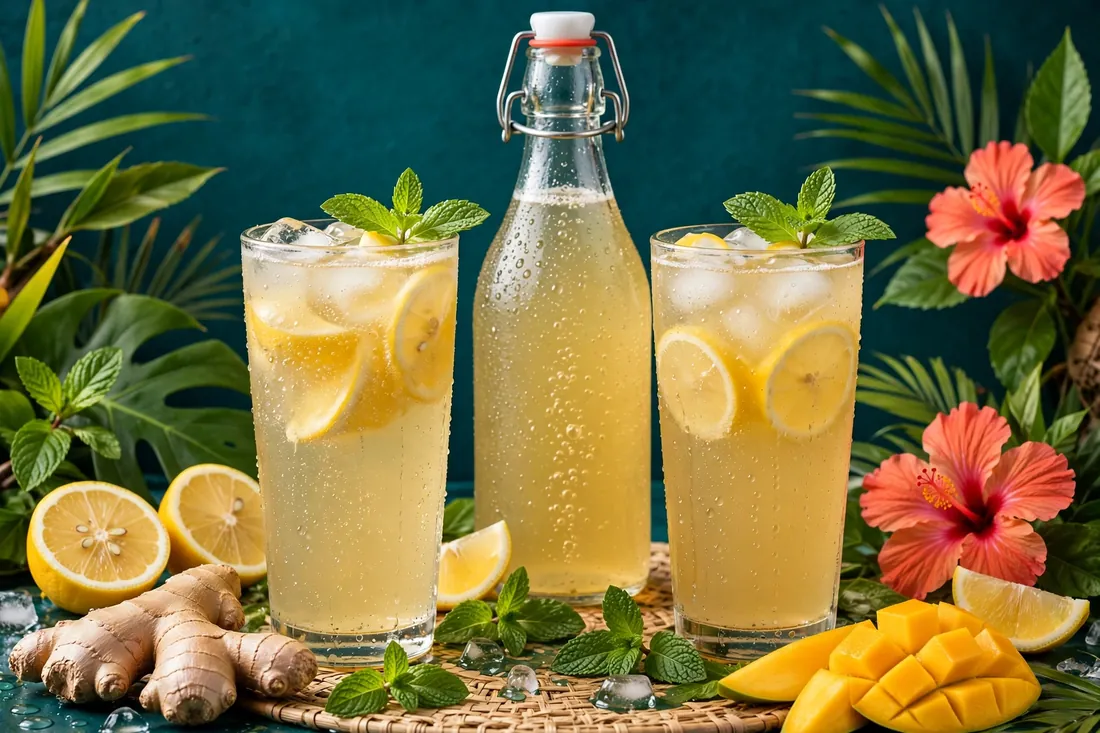
Every mule on this site stands or falls on its ginger beer. Store bought cans can be brilliant, and this site names good ones in the recipes, but homemade ginger beer does something a can cannot do. You choose the heat. You choose the sweetness. You choose how hard the fizz pushes back. Make it once and the Virgin Moscow Mule and the Virgin Dark and Stormy stop tasting like drinks you bought and start tasting like drinks you own.
What is ginger beer?
Ginger beer is a sweetened ginger drink built for heat and fizz, stronger and spicier than ginger ale. The fermented version gets its bubbles from yeast, and the quick version gets its bubbles from soda water, and both belong in a mule.
Before you start
Fresh ginger is the whole game. Look for firm roots with smooth skin that snap cleanly when you break a piece off. Old ginger goes woody and loses its bite, and no amount of sugar will bring that bite back. You do not need to peel young ginger if you wash it well and grate it finely. Older ginger benefits from a quick scrape with a spoon to remove the papery skin. Lemon juice goes in almost every batch on this page because acid brightens ginger and helps the flavour read as sharp rather than sweet.
A note on bottles matters here. For the fermented version, use clean plastic soda bottles that can give a little under pressure and let you feel when the fizz is ready. Glass can crack under pressure if a batch gets enthusiastic, and plastic is the safer teacher for a first batch.
The fermented version
This is the classic method. A small ginger starter, often called a ginger bug, wakes up wild yeast and friendly bacteria on the ginger itself, or you can use a pinch of active dry yeast for a cleaner and more predictable result. This guide uses the pinch of yeast route because it is reliable for a first batch and the flavour stays focused on ginger.
Makes about four cups of concentrate to dilute, or about six tall glasses once topped with soda if you prefer a lighter pour. For a full strength pour, the batch below fills about four tall glasses on its own once fizzy.
- Grate **150 grams of fresh ginger** with its skin on if it is young and clean, or peeled if the skin is thick. Put it in a pot with **4 cups of water** and **three quarters of a cup of sugar**.
- Bring the pot to a gentle simmer and hold it there for ten minutes, stirring now and then. The liquid will turn pale gold and the room will smell like a ginger market.
- Take the pot off the heat and stir in **a quarter cup of fresh lemon juice** and **a quarter teaspoon of cream of tartar** if you have it. The cream of tartar is optional and helps the flavour stay bright.
- Cool the liquid until it feels warm but not hot to a clean finger, about body temperature. Stir in **a quarter teaspoon of active dry yeast**. Hot liquid will kill the yeast, so patience here is the whole trick.
- Pour the liquid through a strainer into clean plastic bottles, leaving about five centimetres of space at the top of each bottle. Cap them tightly and leave them in a warm spot away from direct sun for twenty four to forty eight hours, until the bottles feel firm when you squeeze them.
- Chill the bottles in the fridge for at least twelve hours before you open one. Open slowly over a sink the first time, because a lively batch will rush to greet you. Pour over ice and drink it straight, or use it at full strength in a mule.
The fermented version tastes deeper than the quick one. The ginger heat blooms rather than stings, the lemon sits further back, and tiny bubbles keep rising in the glass for minutes. Drink it within two weeks and keep it cold once it is fizzy, because cold is what tells the yeast to rest.
The quick version
No yeast. No waiting for pressure. This version is a strong ginger syrup cut with lemon and lengthened with soda water at the moment you serve it. It is truly zero proof, it is ready in about an hour including chilling time, and it is the version to make on the day guests are coming.
- Grate **120 grams of fresh ginger** and put it in a pot with **3 cups of water** and **half a cup of sugar**. Add **a pinch of salt** to lift the ginger.
- Simmer gently for fifteen minutes, then take it off the heat and let it steep for twenty minutes with the lid on. A longer steep pulls more heat from the ginger without any extra work.
- Strain the liquid through a fine strainer, pressing the ginger with the back of a spoon to get every last drop of fire out of it.
- Stir in **a third of a cup of fresh lemon juice** and **a quarter cup of fresh lime juice**. Taste it now. It should be intense, sweet and tart all at once, because soda will soften it.
- Chill the concentrate until cold. To serve, fill a tall glass with ice, pour in **half a cup of concentrate**, and top with **half a cup of cold soda water**. Stir once and serve with a lime wedge.
The quick version is brighter and cleaner than the fermented one. It is also endlessly adjustable. Add more concentrate for a stronger mule base, or more soda for a gentle refresher that a crowd can drink all afternoon.
Tuning heat and sweetness
Ginger heat lives in the root and in the steep. For more fire, grate the ginger finer, steep it longer, or add a small sliced fresh chili to the pot and strain it out with the ginger. Taste before you chill, because cold mutes heat a little and a batch that tastes perfect warm will taste softer cold. For sweetness, remember that ginger beer in a mule meets lime juice in the glass, so a touch sweeter in the bottle usually lands balanced in the drink. If a batch comes out too sweet, lemon is the fix, not water. Water thins everything. Lemon sharpens everything.
Storage and safety notes
Keep both versions in the fridge and label the bottle with the date you made it. For the fermented version, check the bottles once a day while they sit warm and move them to the fridge as soon as they feel firm. Never leave a fermented bottle warm for many days to chase more fizz, because pressure keeps building and flavour sours. If a bottle bulges hard or hisses violently on opening, let it settle in the sink, open it slowly, and drink it soon or pour it away if the smell has turned to vinegar.
How to use it in your drinks
Use the fermented version at full strength in a Virgin Moscow Mule, where its deep heat carries the whole glass. Use the quick concentrate in a Virgin Dark and Stormy by pouring the concentrate over ice, topping with soda in the glass, and floating the dark layer the recipe calls for on top. Both versions also make a complete drink on their own over big ice with a lime wedge and a mint sprig, no bottle and no apology needed.
The bottom line
Make the quick version first and learn your heat level. Make the fermented version when you want the deeper flavour and the theatre of a bottle you brought to life yourself. Either way, once your fridge holds a bottle with your name on the label, the mule chapter of this site gets a lot more personal, and a lot more delicious.
Questions, Answered
Is homemade ginger beer truly zero proof?
The quick version is truly zero, because nothing ferments and no alcohol is created. The fermented version uses yeast to make natural fizz, and home fermentation can create a small trace amount of alcohol, so choose the quick version when you need absolute zero and treat the fermented bottles as a low trace drink to check with your own comfort level.
How long does homemade ginger beer keep?
The quick version keeps about one week in the fridge and stays brightest in the first three days. The fermented version keeps about two weeks in the fridge once you chill it, and chilling slows the yeast right down. If it smells sharp in a wrong way or tastes like vinegar, it goes.
Why is my ginger beer not fizzy enough?
Usually the yeast was tired, the room was cold, or the cap let gas escape. Use fresh yeast, keep the bottles in a warm spot away from direct sun for the first stage, and use plastic bottles with caps that seal well so you can feel the pressure build.
Can I use ground ginger instead of fresh?
You can for the quick version in a pinch, using about one teaspoon of ground ginger for each batch, but the flavour will be flatter and a little dusty. Fresh ginger gives the burn and the bright top notes that make ginger beer taste alive, so it is worth the trip to the store.